
The Great Clean Energy Transport Bottleneck
The clean energy transition is moving into a new phase. Renewable generation is expanding, but the central constraint is increasingly logistical rather than technological. Wind and solar projects can be built at high-quality resource sites, yet the electricity often must travel long distances to reach data centers, industrial clusters, transport networks, and cities. At the same time, sectors that need hydrogen, synthetic fuels, or carbon-based feedstocks cannot be decarbonized simply by adding more power lines. The system is shifting from a generation challenge to a delivery challenge.
That shift has sharpened an ideological divide between advocates of total electrification and supporters of a hydrogen-centered energy economy. The debate is often framed as a contest between electrons and molecules, but the harder question is more practical: which transport system can deliver usable energy at acceptable cost, within the available permitting and construction timetable? Direct electricity is usually the most efficient route from renewable generation to an electric motor or industrial load. Yet grid congestion, rights-of-way conflicts, and interconnection delays can make a theoretically superior pathway commercially unavailable. The answer will depend on capital expenditure, transmission losses, spatial constraints, and the value of reaching demand when the market actually needs it.
The Thermodynamic Cost of Molecules and Electrons
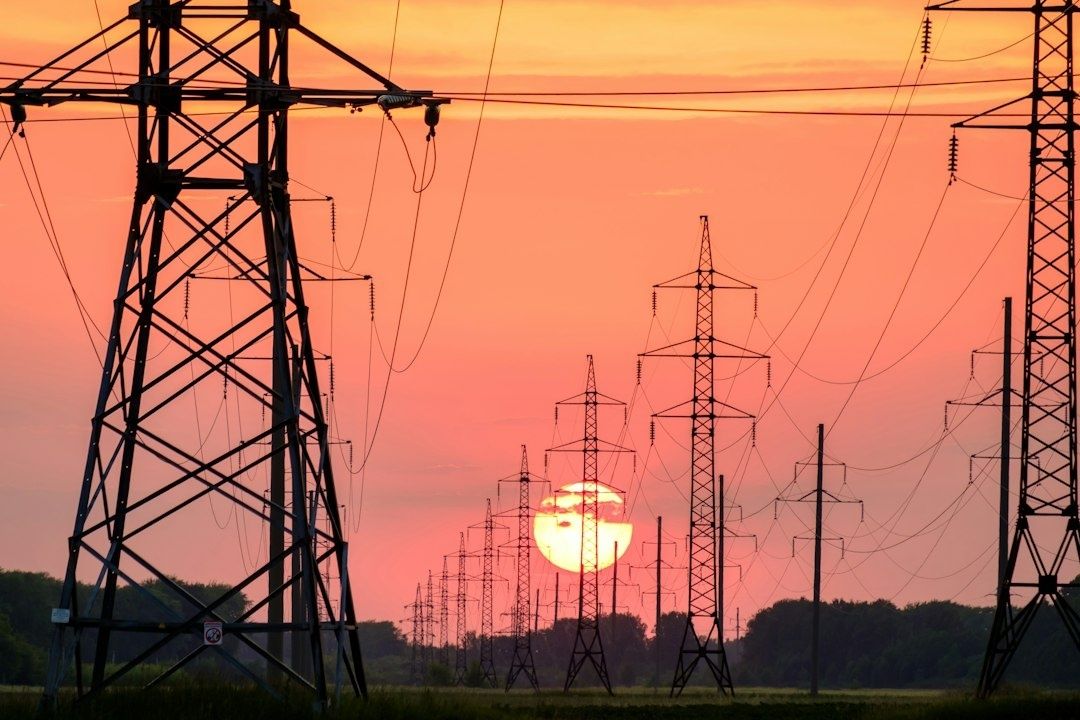
Electricity has a powerful starting advantage. High-voltage alternating-current and direct-current systems can transmit power across long corridors with efficiency commonly exceeding 90 percent, although the precise result depends on distance, voltage, converter technology, network loading, and losses at substations. When renewable electricity is delivered directly to an electric vehicle, heat pump, motor, or resistance-based industrial process, most of the original energy remains available for useful work.
Hydrogen follows a more complicated chain. Renewable electricity must be converted through electrolysis, compressed or liquefied, transported, stored, and then converted back into electricity or used in an industrial process. A hydrogen pathway used for power generation can lose roughly 30 to 45 percent, and in some configurations more, of the original electrical input before the energy is returned to the grid. Compression, conditioning, storage, and reconversion all add cost. For applications that can use electricity directly, these losses create a structural disadvantage.
- Direct transmission: generally offers the highest delivered-energy efficiency when a suitable grid connection exists.
- Hydrogen transport: sacrifices efficiency but can provide chemical energy, storage duration, and feedstock value.
- Pipeline delivery: can become attractive when the alternative is a delayed or politically difficult transmission corridor.
- System economics: depend on delivered cost, reliability, construction time, and the value of energy at the destination, not efficiency alone.
Thermodynamic efficiency therefore cannot be the only basis for allocating capital. A 95 percent efficient transmission route has limited economic value if it requires a decade of permitting, crosses dozens of jurisdictions, and cannot be energized when an industrial facility is ready to operate. A lower-efficiency molecular route may produce a better investment outcome if it uses an existing corridor, connects a concentrated demand center, or provides firm supply during periods when the power system is constrained. In infrastructure markets, time and optionality have monetary value.
High-Voltage Gridlock and Interconnection Realities
Regional transmission planning is facing delays that are increasingly out of step with the speed of new demand growth. Large data centers, advanced manufacturing plants, electrolyzers, and industrial electrification projects are submitting applications for continuous, city-scale power. Yet transmission projects commonly require five to ten years to plan, permit, procure, and build. Planning processes designed for incremental load growth are struggling with concentrated demand that can arrive in a single investment cycle.
Interconnection queues add another layer of uncertainty. Utilities must assess not only the requested connection, but also peak demand, contingencies, network stability, and the possibility that several projects will materialize simultaneously. Speculative applications can occupy queue capacity even when they are not ready to proceed, while inconsistent procedures for large loads make development timelines difficult to forecast. The result is a feedback loop: developers seek unconstrained sites, utilities defer projects until upgrades are completed, and new transmission needs become harder to define because the underlying demand outlook remains fluid.
Long-distance high-voltage direct-current lines face a separate siting challenge. A single corridor may cross hundreds of local jurisdictions, each with different land-use rules, environmental concerns, community priorities, and political incentives. Even when the regional benefits are substantial, affected communities may bear much of the visual, ecological, or property impact while receiving limited direct compensation. The process can turn a technically straightforward line into a prolonged negotiation over land, authority, and distributional fairness.
The cost of delay is not limited to construction budgets. When utility-scale generation cannot reach industrial demand hubs, renewable projects may be curtailed, power prices can diverge sharply between regions, and developers may need to build redundant generation or onsite backup. Curtailment reduces the revenue available to generators and weakens the business case for additional capacity. Flexible interconnection, batteries, and onsite generation can reduce pressure in the short term, but these tools do not remove the need for bulk transport. They buy time while the network is expanded.
Capital Intensity Across Long-Distance Corridors
Comparing pipelines and power lines requires more than placing construction costs side by side. A transmission line moves electricity, while a pipeline moves a fuel or feedstock that may be stored, metered, blended, and consumed at a later point. The relevant comparison is therefore the cost of delivering usable energy or industrial capability over a defined distance, with reliability and utilization included.
Overhead transmission can be highly competitive where rights-of-way are available and the receiving system has sufficient capacity. HVDC is particularly useful for large, steady flows across long distances, including links between remote renewable resources and major load centers. However, converter stations, grid reinforcement, land acquisition, permitting, and network integration can materially increase total project cost. According to technical cost assessments from the National Renewable Energy Laboratory, infrastructure comparisons must account for corridor length, capacity, utilization, and the different cost structures of electricity and pipeline systems.
| Investment metric | High-voltage transmission | Pipeline transport |
|---|---|---|
| Energy conversion | Limited conversion for direct electricity use | Required conversion into a transportable molecule |
| Operating efficiency | Often above 90 percent across suitable high-voltage corridors | Lower full-chain efficiency for hydrogen-based pathways |
| Corridor capacity | Constrained by conductor, voltage, thermal, and stability limits | High volumetric flow in a narrow subsurface corridor |
| Permitting exposure | Visible infrastructure and multiple land jurisdictions | Subsurface route, but significant safety and integrity requirements |
| Best-fit application | Direct electricity for power and electrifiable loads | Bulk molecules, storage, feedstocks, and constrained industrial corridors |
The frequently cited advantage of pipelines is energy density by corridor volume. A pipeline can move a continuous flow of molecules through a relatively narrow right-of-way, while overhead lines require towers, conductor separation, safety clearances, and electrical equipment. Under comparable corridor conditions, pipeline transport can provide substantially greater volumetric energy throughput, with some engineering comparisons describing an order-of-magnitude advantage. That does not make every pipeline cheaper. Hydrogen embrittlement, compression, leakage control, materials compatibility, and lower volumetric energy density than natural gas must be addressed. It does mean that a pipeline can be financially attractive when land and access are the binding constraints.
Capital allocation should also reflect utilization. A transmission line built for a few hours of annual peak output may have a different economic profile from a pipeline supplying a stable industrial customer. Conversely, an electricity corridor serving multiple markets can spread costs across a broader customer base. Financial models should therefore test several cases: high utilization and firm offtake, seasonal operation, flexible demand, curtailment, congestion pricing, and the potential value of repurposing existing infrastructure. The winning asset is often the one that can secure predictable revenue, not the one with the lowest theoretical loss rate.
Industrial Clusters and Molecule Dependent Decarbonization
Heavy industry exposes the limits of a purely electric strategy. Primary steelmaking increasingly requires hydrogen as a reducing agent in direct-reduced iron processes, rather than merely as a source of heat. Refining and chemicals depend on hydrogen and carbon-containing feedstocks for chemical transformation. Ammonia production needs hydrogen as a core input. These sectors can use electricity to power equipment, but electricity alone does not replace the molecules embedded in the production process.
Industrial clusters are also geographically concentrated. Ports, refineries, steel mills, chemical complexes, and storage terminals frequently sit in densely developed regions where new overhead corridors are difficult to site. A subsurface pipeline can connect several facilities within a hub, link production to storage, and provide a shared transport asset for multiple customers. The model is not risk-free, particularly where hydrogen purity, pressure, materials, and safety standards differ from established natural gas practice. It is nevertheless a practical response to spatial constraints that cannot be solved by adding renewable generation alone.
- Steel: hydrogen can serve as a process input in low-carbon iron production.
- Chemicals: hydrogen and carbon molecules remain essential feedstocks, not optional energy carriers.
- Refining: existing hydrogen demand creates a potential anchor market for cleaner supply.
- Industrial hubs: shared pipelines can reduce duplication and improve utilization across several facilities.
Retrofitting natural gas corridors is one potential route, but it must be evaluated asset by asset. Some pipelines may be suitable for blends or conversion after inspection and modification; others may face limitations from metallurgy, compressors, valves, seals, pressure ratings, or regulatory requirements. Dedicated high-pressure hydrogen pipelines can offer better control and reliability, but they require new capital and a sufficiently large customer base. The U.S. Department of Energy”s hydrogen pipeline review identifies dedicated systems as a viable transport option for regional hydrogen hubs, while also underscoring the technical and infrastructure considerations that shape deployment.
For developers, the central question is not whether hydrogen pipelines can compete with wires in every use case. They cannot. The question is whether a molecular network can unlock industrial decarbonization where transmission expansion is too slow, too expensive, or physically blocked. In a cluster with firm offtake, shared storage, and an existing energy corridor, the answer may be yes. In a dispersed market with flexible electric loads and available grid capacity, direct electrification will usually remain the stronger investment.
Designing the Dual-Carriage Energy Matrix
The infrastructure system emerging toward 2035 will not be defined by a single transport technology. High-voltage direct-current lines should carry large volumes of renewable electricity to markets that can use it efficiently, especially where transmission capacity can be expanded through coordinated planning and shared corridors. Pipeline networks should serve targeted roles in industrial clusters, seasonal storage, chemical production, and locations where the energy must arrive as a molecule rather than as a kilowatt-hour.
For policymakers, the priority is to abandon false dichotomies and evaluate projects against regional physical constraints. The most useful indicators include interconnection queue duration, curtailment exposure, corridor availability, firm offtake, utilization rates, conversion losses, local permitting risk, and the ability to repurpose existing infrastructure. Investors should also examine whether an asset has one anchor customer or a diversified demand base, whether regulatory standards for hydrogen are settled, and whether contracts protect revenue during periods of low utilization.
The strategic logic is clear. Wires dominate when the final demand is electric and the route can be permitted and built on schedule. Molecules gain ground when chemical functionality, storage, industrial density, or transmission gridlock changes the cost equation. A resilient clean energy system will use both, not because the technologies are interchangeable, but because the geography and physics of demand are not uniform. The winning portfolios will match each corridor to the form of energy that can reach customers reliably, affordably, and in time to support the next wave of industrial investment.