
Why Turbine Ambition Outpaces the Grid
Offshore wind policy is still being written in gigawatts. Governments are setting aggressive capacity targets, auctioning seabed areas, and treating larger turbines and deeper-water development as central tools for decarbonizing electricity systems. Yet the constraint increasingly sits somewhere less visible than the turbine foundation or the lease boundary. The critical question is whether electricity can move from remote marine generation zones into the onshore network at the required scale and on the required schedule.
That transmission challenge is becoming an operational bottleneck rather than a technical footnote. Developers may have a permitted project, a turbine supply agreement, and a route to market, but still lack certainty that the export cables, offshore converter platforms, onshore substations, and grid reinforcements will be available when construction is complete. The result is a widening gap between generation ambition and delivery capability. For investors, that gap translates into schedule risk, higher contingency costs, and greater uncertainty over revenue commencement.
The timing mismatch is particularly damaging because offshore wind projects are long-cycle assets. A delay in a single transmission component can postpone commissioning of an entire wind farm, while auction rules and power purchase arrangements may continue to impose financial obligations. If national targets are built around nominal turbine capacity rather than deliverable grid capacity, governments risk overstating the pace of decarbonization. The central infrastructure problem is therefore not simply how to build more turbines, but how to synchronize marine generation with an increasingly scarce transmission supply chain.
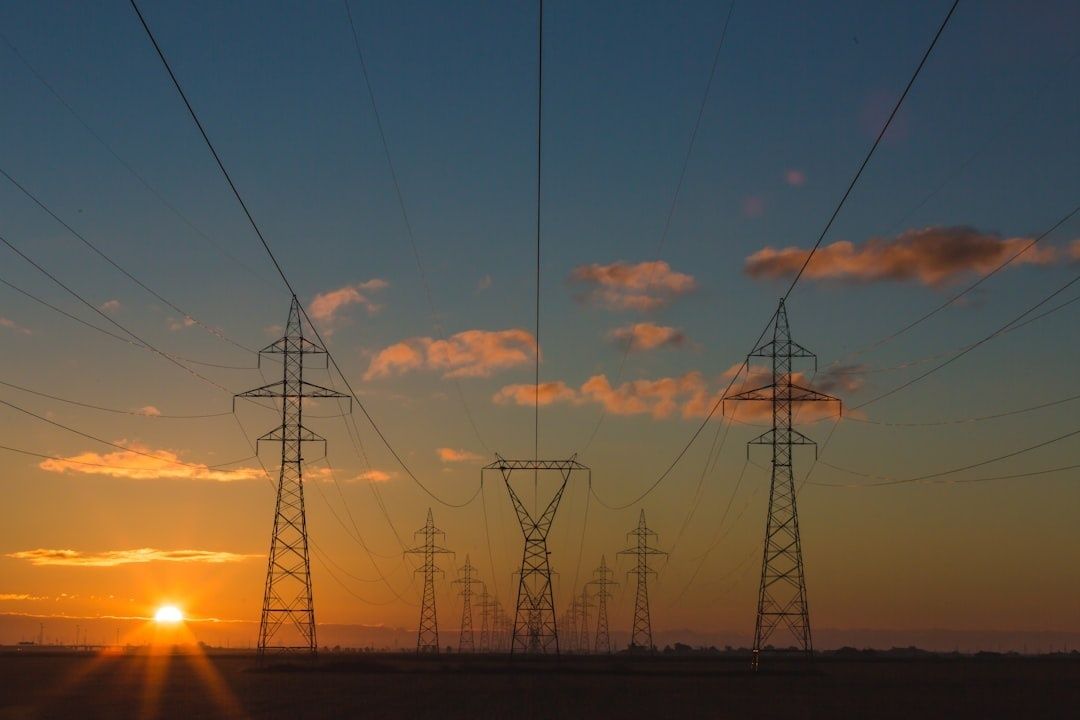
The Subsea Cable Crunch and Twelve-Year Order Queues
High-voltage direct-current, or HVDC, systems have become increasingly important as offshore wind farms move farther from shore and expand into larger development clusters. HVDC can reduce transmission losses over long distances and is often better suited to moving very large volumes of electricity from distant offshore hubs. But the market for the specialized cables and converter equipment required by these systems is narrow. Manufacturers are reporting order books extending beyond a decade in some segments, with production capacity heavily committed through the late 2020s.
The shortage reflects several constraints operating at the same time. Only a limited number of companies have the engineering capability, testing facilities, and manufacturing lines needed for long, high-voltage subsea cables. Copper prices and other raw-material costs have increased the financial exposure of fixed-price contracts, while skilled labor, factory expansion, and certification requirements limit how quickly capacity can be added. A review by offshore cable manufacturers describes historical order backlogs as demand accelerates across continents.
The bottleneck extends beyond factories. The global fleet of specialized cable-laying vessels numbers only slightly more than 60, and many vessels are aging. Those ships serve offshore wind, interconnector, and data-cable markets, creating competition for installation windows. Longer cables, greater water depths, and higher voltage ratings also increase installation complexity, insurance requirements, and the consequences of a fault. A project that secures a manufacturing slot may still face a separate wait for the vessel needed to install the asset.
- HVDC cable demand is rising faster than qualified manufacturing capacity.
- Raw-material volatility complicates pricing, financing, and contract allocation.
- A small supplier base gives utilities limited flexibility when schedules change.
- Specialized installation vessels create a second bottleneck after factory delivery.
- Uncertain delivery dates can weaken offtake, insurance, and final investment decisions.
These conditions are especially difficult for projects in early financing stages. Lenders and institutional investors need credible evidence that the export system will be delivered within the construction schedule, but cable manufacturers have little incentive to reserve capacity without firm commitments, advance payments, or long-term volume agreements. Utilities are responding with large procurement programs designed to secure cables, vessels, and associated equipment several years ahead of need. That strategy improves supply certainty for established transmission operators, but it can leave smaller developers and newer markets competing for residual capacity.
Anatomy of an Interconnection Bottleneck
An offshore wind connection is not a single cable order. It is a chain of interdependent assets, each with its own engineering, procurement, testing, and permitting requirements. The farther a project sits from shore, the more likely it is to require HVDC rather than conventional high-voltage alternating current. Offshore converter stations then transform the electricity for transmission, while onshore converter stations and substations must integrate that power into networks that may already be congested.
| Transmission element | Primary role | Critical dependency | Typical delay consequence |
|---|---|---|---|
| Subsea HVDC cable | Moves high-volume electricity over long marine distances | Specialized factories, copper, testing, installation vessels | Wind farm commissioning postponed or export capacity reduced |
| Offshore converter station | Converts offshore AC output into HVDC transmission | Power electronics, heavy fabrication, limited supplier base | Completed turbines remain unable to export power |
| Onshore converter station | Converts HVDC back to AC for the transmission network | Land, permits, transformers, grid-code compliance | Energy reaches shore but cannot enter the grid at full output |
| Onshore substation and reinforcements | Raises or manages voltage and distributes power inland | Planning approval, land access, system studies | Congestion, curtailment, or delayed connection date |
The offshore converter station is often the least visible critical path. As described in a benchmark from Aegir Insights, HVDC offshore substations involve longer production cycles and a smaller supplier base than HVAC systems. More than 60 gigawatts of North Sea HVDC projects are targeting commercial operation in the early 2030s, meaning simultaneous demand could lengthen lead times beyond current averages. A delay in the platform can neutralize the value of a completed cable and installed turbine array.
Engineering complexity rises further when several projects share an offshore hub or are expected to participate in a future meshed grid. Equipment must satisfy multiple grid codes, protection systems, communications standards, and fault-management requirements. Onshore networks then need to absorb large, variable injections at locations that may not coincide with demand centers. Without coordinated network planning, each project can trigger a separate cycle of studies and reinforcement, creating cascading delays across an entire multi-gigawatt cluster.
Regulatory Friction and North Sea Grid Coordination Delays
Transmission scarcity is being amplified by policy uncertainty. Germany”s decision to postpone an offshore wind auction after an August 2025 tender attracted no bids illustrates how investors assess the complete delivery chain rather than the seabed opportunity alone. Industry representatives argued that existing auction conditions did not provide sufficient confidence on future returns, grid connection timing, and project economics. Reporting from Clean Energy Wire linked the decision to broader concerns over investment certainty and the risk of another unsuccessful tender.
The implications are material for Germany”s target of 30 gigawatts of offshore wind by 2030. Germany connected only 0.5 gigawatts in 2025, bringing installed capacity to 9.7 gigawatts. The industry association BWO has warned that approximately 20 gigawatts by the end of the decade may be more realistic under current conditions. That gap is not explained by turbine technology. It reflects the interaction between auction design, grid readiness, supply-chain availability, and the cost of capital.
Earlier warnings from Germany”s North Sea planning system show how transmission delays move through the project pipeline. The Federal Maritime and Hydrographic Agency indicated that the NOR-9-1, NOR-9-2, and NOR-11-2 grid connection systems could face commissioning delays of up to two years. The connections for areas auctioned in the later round were expected in 2031 rather than 2029, while NOR-11-2 shifted from the third quarter of 2031 to the fourth quarter. The affected systems serve development areas including N-9.1, N-9.2, N-11.2, and N-13.1.
- Separate national auction calendars can conflict with shared regional manufacturing capacity.
- Grid connection dates may change after developers have priced bids and secured financing.
- Different national grid codes complicate equipment standardization and meshed-grid planning.
- Unclear responsibility for anticipatory investment discourages early procurement.
The wider North Sea problem is jurisdictional. Belgium, Denmark, Germany, the Netherlands, Norway, and the United Kingdom are pursuing offshore wind at different speeds and under different regulatory models. Their transmission operators face a common ocean, a shared equipment supply chain, and increasingly interconnected power markets, but planning remains largely national. That fragmentation makes it difficult to build coordinated offshore hubs, share converter infrastructure, or procure standardized equipment at the scale required.
Strategic Reform to Harmonize Offshore Generation and Delivery
The first reform priority is to move from reactive interconnection toward anticipatory grid investment. Under a project-by-project model, transmission work often begins only after a developer has secured a lease or won an auction. That approach may appear to limit unnecessary spending, but it is poorly suited to offshore projects with decade-long equipment queues. Transmission system operators and governments need to identify likely development zones, reserve corridors, and begin permitting and procurement before every generation project reaches final investment decision.
Anticipatory investment does not mean building speculative networks without discipline. It means using regional scenarios, demand forecasts, hydrogen plans, interconnector strategies, and industrial policy to create a portfolio of transmission options. Cost allocation must be transparent, with rules that distinguish between assets serving a specific wind farm and infrastructure intended to support a wider offshore cluster. Clear allocation rules can reduce the hesitation that currently pushes every participant to wait for another party to move first.
Standardization is the second major opportunity. HVDC systems are often treated as bespoke projects, with different technical specifications, converter designs, protection schemes, and interfaces. Some customization will remain necessary, but excessive variation increases engineering hours, factory complexity, testing requirements, and procurement risk. Standardized substation modules, common interface specifications, and interoperable control systems could shorten production cycles and make it easier for multiple suppliers to compete.
- Regional transmission operators should publish coordinated, long-term equipment demand forecasts.
- Governments should create procurement frameworks that support advance orders without eliminating competition.
- Developers and suppliers should align technical specifications early, particularly for converter platforms and cable systems.
- National regulators should establish compatible grid codes and cross-border rules for shared offshore infrastructure.
- Public finance institutions should help cover the early capital requirements of factories, vessels, and testing facilities.
Coordinated procurement compacts could provide the strongest near-term signal to manufacturers. Transmission system operators across the North Sea and other emerging offshore regions could aggregate demand for cables, converters, transformers, and installation vessels. Long-term commitments, advance payments, and volume guarantees would allow suppliers to expand capacity with greater confidence. Industry analysis from Inverto”s supply-chain assessment emphasizes that utilities may need to become customers of choice by securing production volumes, purchasing directly from original equipment manufacturers, and collaborating on specifications.
That strategy also carries industrial and geopolitical implications. Concentration among a small number of suppliers creates exposure to factory outages, trade restrictions, cyber risks, and political disputes. Building additional manufacturing capacity in Europe, North America, and other strategic markets can improve resilience, although domestic production will not eliminate the need for global sourcing. The objective should be diversified capability, not autarky. Public support can be tied to workforce development, low-carbon materials, cybersecurity standards, and transparent delivery performance.
Aligning Policy and Cable Supply to Power the Energy Transition
Offshore wind expansion will be judged by delivered electricity, not by the number of turbines awarded in an auction or the gigawatts listed in a national strategy. Transmission readiness must therefore become a co-equal priority with generation volume. Cable factories, converter platforms, installation vessels, substations, and inland network reinforcements should be treated as core energy-transition infrastructure, with planning horizons that match the life cycle of offshore projects.
The risk is not limited to delayed construction. If transmission capacity arrives late or remains uncertain, offshore assets can face prolonged outages, curtailment, higher financing costs, and stranded-generation risk. The next phase of marine energy growth requires coordinated procurement, standardized engineering, credible auction design, and public-private capital capable of expanding the supply chain before demand peaks. North Sea coordination offers an immediate test. If governments and transmission operators can align across borders, offshore wind can evolve from a collection of national projects into a reliable regional power system. If they do not, the grid will continue to set the pace, regardless of how quickly turbines improve.