
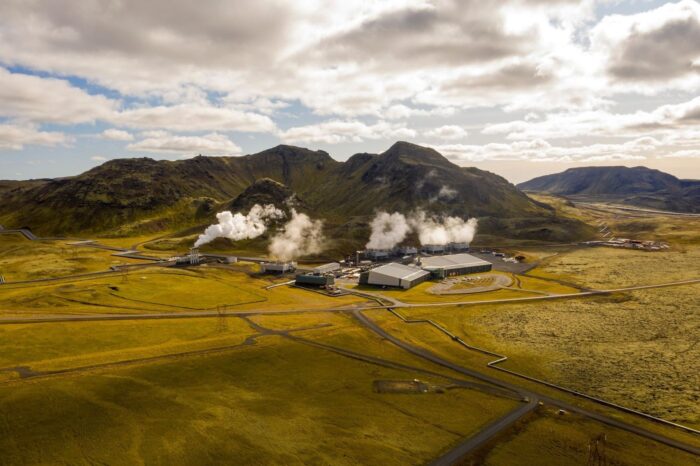
Redefining Baseload Power Deep Beneath the Surface
The next phase of the clean energy transition will be judged not only by how quickly wind and solar capacity expands, but by whether power systems can remain reliable when weather conditions are unfavorable. Electricity demand is rising as transport, buildings, industrial processes, data centers, and hydrogen production move toward electrification. That creates a structural need for firm, carbon-free generation that can operate around the clock and complement resources whose output varies with sunlight and wind. Geothermal power has long offered that profile, but its conventional form has been limited by geology. The most valuable resources tend to occur where heat, underground water, and naturally permeable rock coincide, often near tectonic plate boundaries and volcanic zones.
Advanced geothermal technologies are changing the geographic equation. Directional drilling, high-temperature sensors, reservoir modeling, and controlled stimulation can be used to create or improve underground heat exchangers in hot rock that lacks sufficient natural permeability or fluid. The U.S. Department of Energy”s geothermal program describes enhanced geothermal systems, or EGS, as engineered reservoirs designed to circulate fluid through hot rock and bring heat to the surface. If technical performance and project economics improve as expected, geothermal could move from a geographically constrained resource to a repeatable infrastructure platform serving regions far from traditional hydrothermal fields.
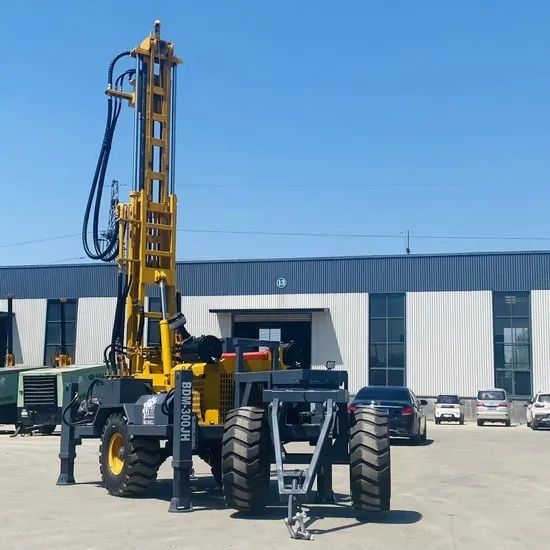
The Technology Transfer from Oil and Gas to Hot Dry Rock
Next-generation geothermal draws heavily on capabilities developed for unconventional oil and gas. In petroleum operations, horizontal wells extend the contact area with a target formation, while hydraulic stimulation creates connected pathways through low-permeability rock. EGS applies related concepts to crystalline basement or other hot formations, although the commercial objective is fundamentally different. Instead of extracting hydrocarbons, operators inject water, recover heated fluid, and repeatedly circulate that fluid through a subsurface reservoir.
The basic engineering sequence involves drilling an injection well and one or more production wells, placing the wellbores at depth, and connecting them through a stimulated volume of rock. Pressure is then managed to open existing fractures or create new conductive pathways. Water moves through that network, absorbs heat from the surrounding formation, and returns to the production well at temperatures suitable for electricity generation or direct industrial heat. Surface facilities transfer thermal energy to a power cycle, commonly an organic Rankine cycle in lower-temperature applications, while the cooled fluid is reinjected.
The objective is not simply to fracture as much rock as possible. A commercially useful reservoir must provide sufficient flow, maintain thermal contact, avoid excessive fluid loss, and sustain production over many years. That makes reservoir control a central challenge. Petroleum stimulation often seeks to maximize short-term hydrocarbon flow from a targeted zone. Geothermal circulation instead requires a durable, distributed heat exchanger that balances permeability with containment and limits pressure changes that could trigger unwanted seismic activity.
- Well architecture: Horizontal and multilateral wells can increase contact with hot formations and create more opportunities for fluid circulation.
- Reservoir engineering: Microseismic data, tracer testing, pressure measurements, and numerical models help map how injected fluid moves underground.
- Temperature management: Drilling materials, cement, electronics, pumps, and downhole tools must withstand higher temperatures and corrosive fluids than many petroleum applications.
- Operational objective: The project must sustain heat extraction and reinjection over a long operating life rather than optimize a finite hydrocarbon recovery profile.
Recent drilling innovation is particularly important because well construction can dominate geothermal capital expenditure. Faster drilling, improved bit durability, advanced casing designs, and better high-temperature measurement tools could reduce the cost per installed megawatt. Existing oil and gas infrastructure, service companies, geological data, and workforce capabilities may also provide a bridge into geothermal, although adaptations are necessary. Geothermal wells are often deeper, hotter, and exposed to different chemical conditions, so petroleum expertise is an enabling foundation rather than a complete off-the-shelf solution.
Conventional Hydrothermal Versus Enhanced Geothermal Systems
Conventional hydrothermal plants rely on a naturally favorable subsurface combination. The reservoir must be hot enough to produce useful thermal energy, contain or connect to enough fluid, and possess sufficient permeability for commercial flow rates. When those conditions occur together, development can be highly effective. Wells tap naturally circulating hot water or steam, and the resource can deliver stable output with a relatively small surface footprint. The limitation is that these geological combinations are unevenly distributed, making conventional geothermal development concentrated in places such as Iceland, Indonesia, parts of East Africa, New Zealand, the western United States, and other tectonically active regions.
EGS changes the development model by treating the reservoir as an engineered system. Heat can be available in many more locations, but operators must create the permeability and manage the fluid circulation required to access it. Closed-loop designs take a different approach by circulating fluid through sealed wellbores or underground heat exchangers, potentially reducing dependence on natural fractures and limiting interaction with formation fluids. Superhot geothermal concepts aim to access much higher-temperature resources, which could increase energy output per well but also introduce substantial materials, drilling, and control challenges.
| Factor | Conventional hydrothermal | Enhanced geothermal systems |
|---|---|---|
| Geographic availability | Concentrated where heat, fluid, and natural permeability coincide | Potentially broader, provided sufficiently hot rock can be drilled and engineered |
| Reservoir condition | Natural hot-water or steam reservoir | Hot rock with permeability and circulation pathways created or improved by stimulation |
| Initial capital intensity | Often lower subsurface engineering risk where resource quality is proven | Higher early-stage drilling and reservoir-development risk, with potential cost reductions through repetition |
| Surface footprint | Compact generation facilities and well pads | Also potentially compact, although additional wells, monitoring, and surface equipment may be required |
| Resource lifecycle | Can decline if production exceeds natural recharge or reinjection is poorly managed | Depends on reservoir design, flow balance, thermal drawdown, and long-term reinjection performance |
| Primary technical risk | Resource confirmation and sustainable reservoir management | Drilling cost, fracture control, fluid loss, induced seismicity, and maintaining productive circulation |
The comparison matters for investors because EGS shifts risk toward the front end of the project. Conventional projects can still face expensive exploration failures, but naturally productive fields provide a clearer technical pathway once confirmed. EGS projects must prove that an engineered reservoir can be created at commercial scale and operated without excessive water loss or declining output. The upside is a larger addressable market and a design that could become more standardized. The economic question is whether repeated drilling and stimulation can produce a reliable learning curve similar to the cost reductions achieved in other modular energy technologies.
Economics, Grid Integration, and Overcoming the Scaling Bottleneck
Next-generation geothermal currently faces a cost problem before it faces a demand problem. Drilling several deep wells, managing high-temperature equipment, and proving a productive reservoir can make early projects expensive on a levelized cost of energy basis. Unlike wind and solar, geothermal does not benefit from a fully mature, standardized supply chain across all major components and geological settings. Financing is also sensitive to subsurface uncertainty. A project can have a strong power purchase agreement and a favorable site, yet still struggle to secure capital if reservoir performance remains unproven.
The investment case improves when geothermal is valued for what it contributes to the grid rather than compared only with the lowest-cost intermittent generation. A geothermal plant can provide steady output, capacity during periods of low renewable production, voltage support, and potentially flexible operation within technical limits. Its dependable profile can reduce the need for some combination of batteries, gas-fired balancing capacity, transmission overbuild, and curtailment. For large electricity consumers, particularly data centers and industrial facilities with high utilization rates, firm geothermal power may also reduce exposure to volatile wholesale markets and constrained grid connections.
- Prove the subsurface: Use staged exploration, pilot wells, and detailed reservoir characterization before committing to full field buildout.
- Standardize the development model: Repeatable well designs, stimulation protocols, monitoring systems, and modular power equipment can reduce engineering and construction costs.
- Price reliability appropriately: Capacity contracts, clean firm power procurement, and long-term offtake agreements can recognize the value of availability beyond energy-only pricing.
- Build a risk-sharing framework: Public drilling insurance, demonstration grants, loan guarantees, and shared geological data can lower the financing premium attached to early projects.
- Integrate safety into design: Baseline seismic surveys, traffic-light protocols, pressure controls, and transparent communication should be treated as core infrastructure rather than late-stage compliance tasks.
Induced seismicity is the most visible social and regulatory risk. Fluid injection changes underground pressure and can reactivate faults, although the scale and probability of seismic events depend on local geology, injection volumes, pressure management, and reservoir design. Effective projects require a dense monitoring network, a defined baseline, real-time interpretation, and clear thresholds for reducing or stopping operations. The objective is not to claim that risk can be eliminated, but to demonstrate that it can be detected and managed through disciplined operating procedures. Regulators and communities will likely judge projects on the credibility of those controls as much as on their emissions profile.
Scaling will also depend on industrial bottlenecks outside the wellfield. Transformers, drilling rigs, high-temperature pumps, specialty alloys, power electronics, and organic Rankine cycle equipment may become constraints if geothermal deployment accelerates. A Center for Strategic and International Studies analysis estimates that the global next-generation geothermal market could reach 120 gigawatts by 2035 and more than 800 gigawatts by 2050, while warning that supply-chain dependencies and concentrated equipment production could limit the pace of expansion. Those projections are not guaranteed outcomes, but they illustrate why manufacturing capacity and project finance must develop alongside subsurface technology.
Building the Subsurface Foundation of Modern Clean Grids
The commercial pathway for next-generation geothermal will be established through a sequence of increasingly credible demonstrations. Early projects must show that engineered reservoirs can deliver predictable flow, maintain useful temperatures, control water losses, and operate within acceptable seismic limits. The next step is not simply larger drilling campaigns, but repeatability across multiple geological settings. Evidence that a well design, stimulation approach, and power system can be transferred from one project to another would materially change how lenders, utilities, and industrial buyers assess the technology.
Policy will influence the speed of that transition. Permitting systems need to distinguish between geothermal development and conventional mining or oil and gas operations while retaining rigorous groundwater, seismic, and environmental safeguards. Public support for exploratory drilling can reduce the highest-risk portion of the capital stack, while long-term clean capacity contracts can give developers the revenue visibility required to finance fields. Industrial offtakers, utilities, and data center operators also have a decisive role. By signing bankable agreements for firm clean power and heat, they can help move geothermal from a technology demonstration into an investable infrastructure class.
The strategic case extends beyond emissions reduction. Geothermal resources are domestically anchored, less exposed to weather volatility than wind and solar, and potentially available in countries that currently import large quantities of fuel or electricity. A mature global supply chain could support energy security while creating new markets for drilling services, power equipment, geological software, and high-temperature materials. The central test will be whether advanced drilling can convert the enormous heat stored in ordinary hot rock into dependable, financeable output. If that test is met, the subsurface will become more than a source of occasional renewable generation. It will form a durable foundation for reliable, sovereign, round-the-clock clean power.